
Care guide · Large animals
Alpacas and llamas: everyday care
Herd animals that hide illness well. Shearing, toenails, teeth, vitamin D, vaccinations and worming, and the notifiable diseases every camelid keeper should know.
- Herd
- Never alone: three or more is best
- Shearing
- Once a year
- Winter
- Ask us about vitamin D
A herd, not a pet
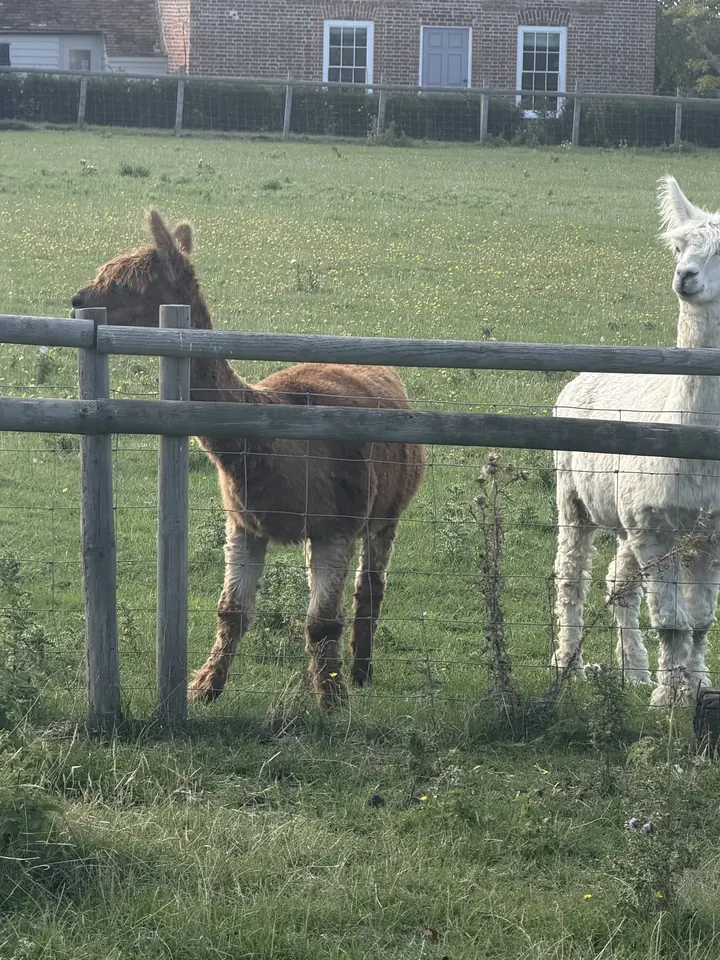
Camelids are herd animals and become stressed alone. Keep at least two, and three or more is better. They need a field shelter from wind and rain, clean water and good grazing or hay.
Routine care
- Shearing once a year, usually in late spring, so they don’t overheat in summer.
- Toenails trimmed several times a year. Overgrown nails twist the foot and cause lameness.
- Teeth checked regularly. Males grow sharp fighting teeth that may need trimming.
- Vitamin D: UK winters are dark, and many alpacas need a supplement. Ask us about the right dose for your animals.
- Vaccination against clostridial diseases, and worming based on faecal egg counts.
Hidden illness
Camelids are stoic. One that lies down apart from the herd, stops eating or chewing the cud, or loses weight needs a vet, sooner rather than later. Run your hands over the back and ribs regularly: the fleece hides weight loss.
Registration and notifiable diseases
APHA advises camelid keepers to get a county parish holding (CPH) number for the land and a herd mark, so movements can be traced in a disease outbreak.
Camelids can catch bovine TB and bluetongue. Both are notifiable: if you suspect either, you must report it straight away to the Defra Rural Services Helpline on 03000 200 301.
When to call us
Call us straight away, day or night, if:
- Lying down apart from the herd, or not eating
- Weight loss under the fleece
- Lameness, or a twisted foot
- Breathing problems, or signs of bluetongue
Large animal visits Aftercare Medicines
Advice guides on this
- Bluetongue: signs, reporting and protectionBluetongue is active across England. The signs in sheep and cattle, who to call, and vaccination.
- Notifiable diseases: what to report, and howSome diseases must be reported by law, even on suspicion. Which ones, and the numbers to call.
- When an animal dies: the rulesFarm animals, pet pigs included, can’t be buried. What the law allows for livestock, horses and pets.
General information only. This page is not a substitute for professional veterinary advice, examination, diagnosis or treatment, and every animal is different. If you think your animal needs urgent attention, call us immediately on 01843 808344. Services and techniques described are subject to your vet’s clinical judgement. Information correct at the time of publication (November 2026).