Narrow nostrils and an over-long soft palate make flat-faced dogs work hard for every breath. John is an approved RFG Scheme assessor and performs BOAS airway surgery himself, in our own theatre in Margate, so your dog is graded, operated on and followed up by the same vet.
Approved assessor, Respiratory Function Grading Scheme
1
Approved RFG Scheme assessor
John is an approved assessor for the Royal Kennel Club and University of Cambridge Respiratory Function Grading Scheme. Your dog’s grade, from 0 to 3, is official and recorded.
2
BOAS surgery, done by John
John performs BOAS airway surgery himself, and airway surgery for flat-faced breeds is a large part of his work here.
3
Surgery here, not referred on
Nostril widening, soft palate shortening and other airway surgery are carried out here, in our own theatre in Margate. You won’t be sent elsewhere for the operation.
4
One vet, start to finish
The vet who grades your dog is the vet who operates and checks them afterwards, so nothing is lost in a handover.
GradingA short, non-invasive breathing check and exercise test.
A planWhat we found, what we advise, and a written estimate.
SurgeryA full airway check and the operation, under one anaesthetic.
Waking upWatched closely as they wake, when the airway is most delicate.
Follow-upChecks with John until they are breathing easily.
Your dog’s breathing grade, 0 to 3
John grades dogs here at the practice, as an approved assessor for the Royal Kennel Club and University of Cambridge scheme. It is a quick, non-invasive check with a short exercise test, and the grade is official and recorded.
The breathing grades, 0 to 3Royal Kennel Club and University of Cambridge Respiratory Function Grading Scheme
Clinically unaffectedClinically affected
0
Grade 0: All clear
Breathing noise
None, even through a stethoscope
What it means
Free of breathing signs of BOAS
What happens next
Nothing more is needed. A yearly check is suggested if your dog is under 2.
1
Grade 1: Mild
Breathing noise
Mild, heard only through a stethoscope
What it means
Mild signs that don’t affect exercise
What happens next
Nothing urgent. A yearly check is suggested if your dog is under 2.
2
Grade 2: Moderate
Breathing noise
Can be heard without a stethoscope
What it means
Moderate signs that need managing
What happens next
Treatment, which may mean weight loss, surgery or both. We talk you through it.
3
Grade 3: Severe
Breathing noise
Can be heard without a stethoscope, with severe signs
What it means
Severe signs that need a full examination
What happens next
A full examination and surgery are recommended. Not recommended for breeding.
How the test works
Listen at restJohn listens to your dog’s breathing before any exercise.
Three minutes of exerciseA brisk trot, to bring out any breathing problem. We stop at once if your dog is struggling.
Listen again, then gradeThe breathing is checked straight afterwards and compared, and your dog is given a grade from 0 to 3.
Dogs can be graded from 12 months old. The scheme covers Bulldogs, French Bulldogs and Pugs, and dogs used for breeding should be regraded every two years.
Showing at Crufts? Since 2026, Bulldogs, French Bulldogs and Pugs graded 2 or 3 can’t enter, so get graded early. Every dog is different: please speak to us for advice on yours.
BOAS is a breathing problem caused by the shape of a flat-faced dog’s airway.
Noisy breathing, snoring, tiring easily and overheating are common signs.
John is an approved assessor for the Royal Kennel Club and University of Cambridge breathing grading scheme, and performs BOAS surgery here too. You won’t be sent elsewhere for the operation.
Surgery widens the nostrils and shortens the soft palate. It can transform quality of life, but it is not a cure.
Weight control, a harness and keeping cool all help, with or without surgery.
BOAS stands for brachycephalic obstructive airway syndrome. Put simply, a flat-faced dog’s airway can be too narrow or crowded for air to flow easily. It is usually a combination of things:
Narrow nostrils, a bit like breathing through a straw
A long, thick soft palate that hangs into the back of the throat
Extra tissue in the throat and voice box that can be sucked into the airway
A narrower windpipe than you would expect for the dog’s size
Did you know? Try breathing through a drinking straw while jogging up the stairs. That’s a little like what a dog with severe BOAS can feel during exercise. Not quite so ‘cute snoring’ after all.
Signs to look out for
Noisy breathing, snorting or snoring, even when awake
Getting tired quickly on walks, or lagging behind
Struggling in warm weather or after excitement
Sleeping sitting up, or with the chin resting on a toy
Waking suddenly at night, or pauses in breathing while asleep
Gagging, regurgitating or vomiting, especially after eating
Fainting or collapsing
This is an emergency
If your dog is struggling to breathe, has blue or grey gums, collapses, or is overheating and can’t settle, call us immediately on 01843 808344. We’re here 24 hours a day, every day.
How we assess breathing
We listen to your dog’s breathing at rest and after gentle exercise, look at the nostrils, check weight, and ask how they cope day to day. A short phone video of your dog sleeping or walking is a great help.
John is an approved assessor for the Royal Kennel Club and University of Cambridge Respiratory Function Grading Scheme. It grades dogs from 0 to 3 with a quick, non-invasive check and a short exercise test. The grades, and what each one means, are set out above.
The full look at the palate, throat and voice box is done under anaesthetic, usually just before surgery.
How we can help
Every dog is different, and we’ll tailor a plan to yours. It may include:
Weight management. Even a small amount of weight loss can make breathing noticeably easier.
Lifestyle changes, like a harness, shorter walks in cooler parts of the day and keeping calm in the heat.
Treating related problems, such as reflux, skin fold infections or eye issues.
Surgery, where it’s the right choice. John carries it out here, in our own theatre.
The operation
Surgery is planned around what your dog’s airway needs. It usually includes:
Widening the nostrils. A small wedge of tissue is removed from each nostril so more air can get in.
Shortening the soft palate. The part that hangs over the entrance to the windpipe is trimmed back. In some dogs it is thinned as well.
Removing extra tissue in the voice box, called everted laryngeal saccules, where the strain of breathing has pulled it into the airway. Enlarged tonsils are trimmed in some dogs.
Flat-faced dogs need extra care under anaesthetic, so we plan carefully, monitor closely and pay special attention as your dog wakes. Results are often best when surgery is done before the airway has been under strain for years.
Recovery, week by week
Every animal heals at its own pace, and we’ll give you a written plan for yours. As a guide:
The first hours
Your dog is watched closely while they wake up, when the airway is most delicate.
The first two weeks
Soft food, a harness instead of a collar, short calm lead walks, and a cool, quiet home. A little coughing, gagging or reverse sneezing is common while the throat heals.
Check-up
We check the wounds and how your dog is breathing.
For life
Most dogs breathe much more easily, though some noise can remain. Staying slim, wearing a harness and avoiding the heat still help.
Every anaesthetic and operation carries some risk, and flat-faced dogs carry more than most. The main concerns are swelling in the throat as your dog wakes, and regurgitating food or fluid into the airway. In rare cases a temporary breathing tube in the neck is needed. This is why we plan carefully, monitor closely and keep a watchful eye during recovery.
We’ll explain the benefits, the risks and the aftercare honestly, so you can make the right decision for your dog.
Your questions answered
Will my puppy grow out of noisy breathing?
Unfortunately BOAS usually doesn’t improve on its own and can get worse with age. If your puppy breathes noisily, get them checked early.
Is surgery a cure?
Surgery can greatly improve airflow, but it can’t change the overall shape of the skull. Most dogs still benefit from staying slim, wearing a harness and avoiding the heat.
Can my dog be graded before breeding or showing?
Yes. John is an approved assessor for the Royal Kennel Club and University of Cambridge Respiratory Function Grading Scheme. Since 2026, Bulldogs, French Bulldogs and Pugs graded 2 or 3 can’t enter Crufts, so get graded early.
Does pet insurance cover BOAS?
It depends on your policy, and some insurers treat it as a breed-related or pre-existing condition. Check your policy wording and speak to your insurer before any planned procedure.
What it costs
Every operation is different, so we give you a written estimate once John has examined your animal. It sets out the operation, the anaesthetic, any X-rays, the stay with us, medicines to take home and check-ups. If the cost may go over the estimate, we call you before carrying on.
Our published prices for consultations, X-rays and hospital stays are on the prices page.
General information only. This page is not a substitute for professional veterinary advice, examination, diagnosis or treatment, and every animal is different. The plates are simplified illustrations, not pictures of any one animal. If you think your animal needs urgent attention, call us immediately on 01843 808344. Services and techniques described are subject to your vet’s clinical judgement. Information correct at the time of publication (November 2026).
Case study
From John’s casebook
A real case of BOAS/airway surgery, from first visit to recovery.
BOAS/AirwayFrom John’s casebook · October 2026
Frank, a French Bulldog who struggled to breathe
Patient
Frank
Species and breed
Dog, French Bulldog
Age
2 years
Came to us with
Snoring and difficulty breathing.
What John found
An enlarged soft palate and closed nostrils. BOAS grade 3.
What we did
BOAS surgery on the soft palate, with both nostrils widened, in one operation under general anaesthetic. No complications during or after surgery.
Recovery
Home with pain relief and antibiotics. Check-ups on 16 and 21 October, with the stitches out on 21 October.
Outcome
Breathing very much better after surgery, and healing correctly at his last check.
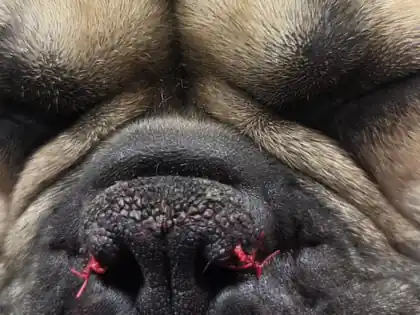
Frank’s nostrils after surgery, with the stitches still in
BOAS/AirwayFrom John’s casebook · September 2026
Moana, a French Bulldog with noisy breathing and an eyelid lump
Patient
Moana
Species and breed
Dog, French Bulldog
Age
6 years
Came to us with
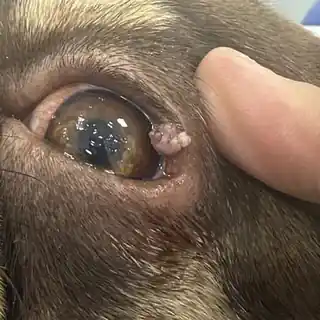
Snoring, noisy breathing and difficulty breathing, with a small lump on her left eyelid.
What John found
BOAS affecting the soft palate, and a small lump (a chalazion) on the left eyelid.
What we did
BOAS surgery on the soft palate, with the eyelid lump removed under the same general anaesthetic. Her nostrils did not need widening. No complications.
Recovery
Home with pain relief, an anti-inflammatory and antibiotics, and a re-check four days later.
Outcome
Breathing better and healing well at her re-check.
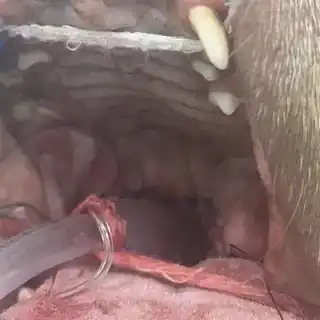
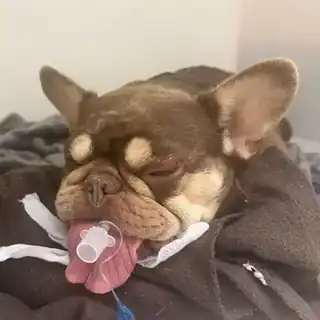
The lump on her eyelid, before surgeryHer soft palate during surgeryWaking up after surgery